

UTC
Launch
Astronomy and exploration magazine
We revisit the milestones that explain how we arrived here.
Drag to explore · Ctrl + scroll to zoom · Space to pause
Visual exploration
Explore our atlases, maps and comparisons to discover the universe at different scales.
Knowledge base
Agenda · UTC
Verified dates, subject to operational or weather changes.
Launch
Launch
Now

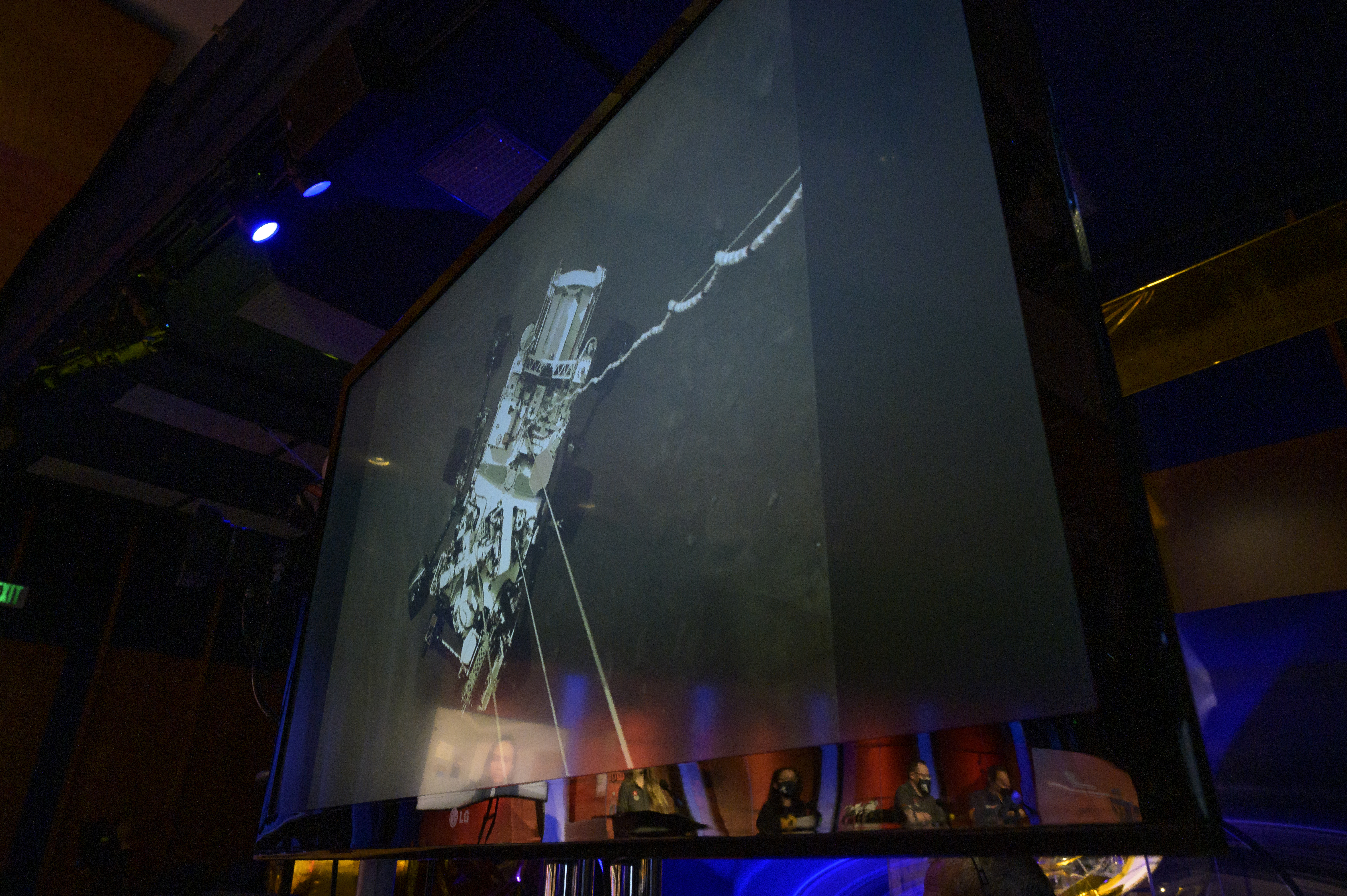
The Perseverance rover directly measured fine and ultrafine dust that had adhered to samples of spacesuit materials and other exposed surfaces on Mars. The smallest particles, around 100 nanometers, persisted despite yea...


Mission archive
Objectives, instruments, timelines and results explained in context.
Mission archive
Mission archive
Mission archive
Mission archive
Cosmic neighbourhood
Reference illustrations; sizes and distances are not shown to scale.
Deep atlas
From the stellar neighbourhood to the largest structures.
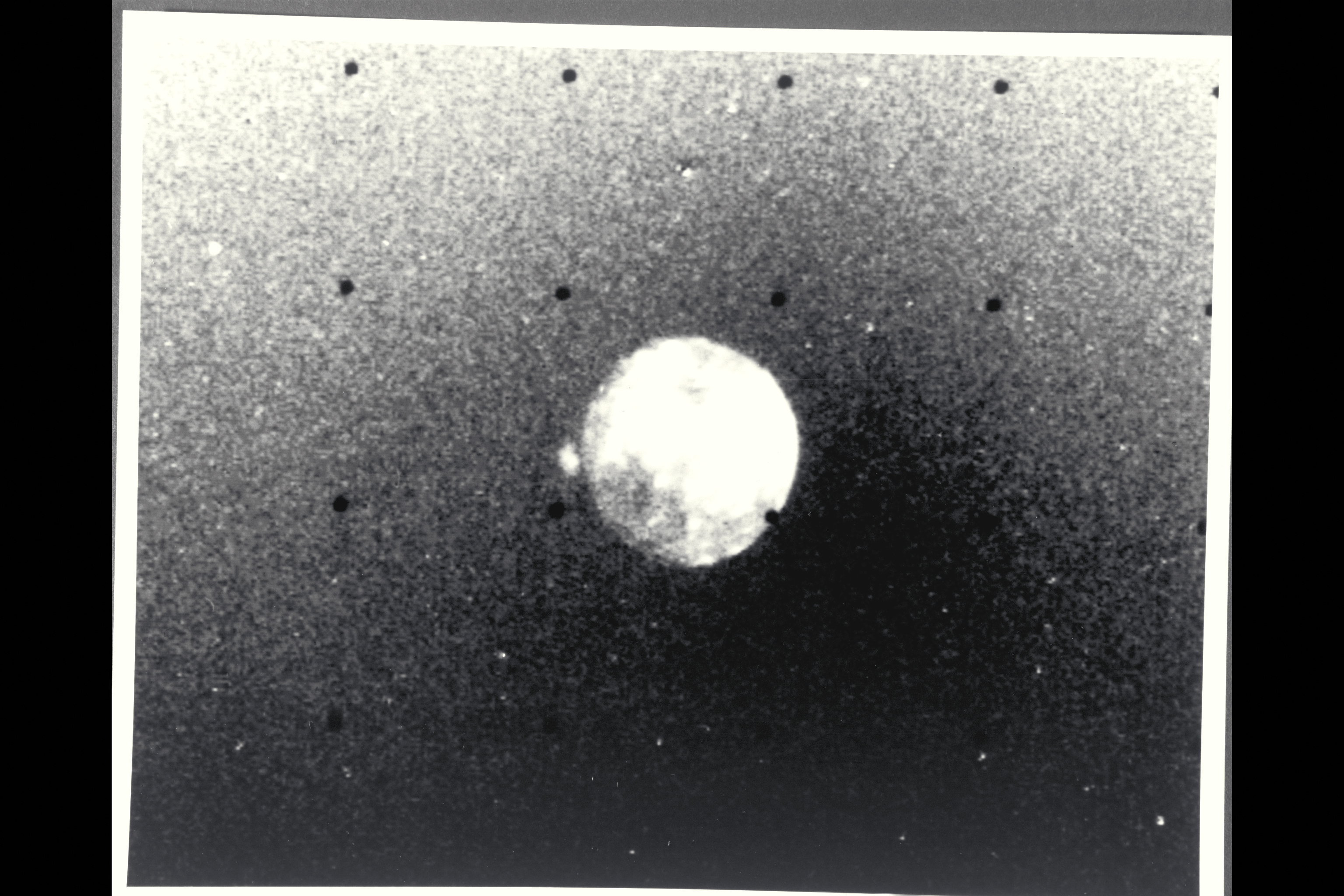
Irregular Jovian moon discovered in 1914, possibly a member of the Pasiphae group.
Large-scale cosmic structure grouping clusters, groups, and individual galaxies, in which the Local Group...

The Observable Universe is the cosmic setting studied by cosmology, whose history extends from early infl...
Retrograde irregular satellite of Jupiter and key member of the Pasiphae group, likely of asteroidal orig...

Supermassive black hole located at the center of the Milky Way, with a mass of 4 million times that of th...
Aerospace engineering
ArianeGroup
National Space Development Adminstration
EADS Launch Vehicles (EADS LV)
Spacecraft
How we observe
The Very Large Telescope (VLT) is the world's most advanced optical and infrared observatory, operated by ESO at Cerro Paranal, Chile. It consist...
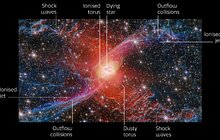
NASA-led infrared space observatory with ESA and CSA partners, operating near the Sun–Earth second Lagrange point to study the early universe, co...
Vera C. Rubin Observatory is an astronomy facility on Cerro Pachón, Chile, using the 8.4-metre Simonyi Survey Telescope and LSST Camera for repea...
Understand the cosmos
Complex ideas explained without sacrificing precision.
NASA’s monthly guides highlight specific events and viewing times, while its year-round resources help you prepare. The...
The International Space Station is a modular complex that serves as a microgravity laboratory and home for astronauts. A...
A practical guide to turning planetary science concepts into four classroom activities: placing the eight planets to sca...
Space exploration can teach much more than astronomy: a lunar mission raises questions about water and design, satellite...
Historical archive
On October 4, 1957, the Soviet Union launched Sputnik I, the first artificial satellite. At the height of the Cold...
A guide to researching people connected with space history through NASA’s documentary resources and one ESA archive...
The history of robotic exploration is not preserved in a single account. NASA’s historical resources offer several...
Historical records can help reconstruct the beginnings of rocketry, provided we distinguish what the documents say...
Ancient astronomy cannot be reduced to a list of dates or discoveries. One thread running through its history is th...
Verified licence
Images, video, audio and sonifications with clearly identified provenance.
Essential reading
The Perseverance rover directly measured fine and ultrafine dust that had adhered to samples of spacesuit materials and other exposed surfaces on...
After passing behind the Sun in October 2025, interstellar comet 3I/ATLAS became observable from Earth again, and astrometric observations resume...

Learn what holds a galaxy together, how it differs from a planetary system, and how to recognize common shapes before looking for Andromeda.
What the community is reading
Traceability
We track changes to dates, mission status and scientific results.
A connected universe
Counts updated from our knowledge base.
Follow the signal
Subscribe to the global feed or choose a topic. Open, chronological RSS with no algorithms.


